Masonry Restored for Curb Appeal and Structure
Brick Repair & Replacement in Amarillo for Older Homes With Cracked, Spalled, or Weathered Masonry
High plains weather extremes—freezing winters, intense summer heat, and wind-driven moisture—cause brick to crack, mortar joints to crumble, and masonry surfaces to deteriorate on homes across Amarillo and Panhandle towns like Pampa. Straight Edge Siding, Fencing & Decks repairs damaged brick and replaces sections beyond saving, restoring both the structural integrity and appearance of exterior walls, chimneys, and decorative masonry features. Matching existing brick color and mortar ensures repairs blend seamlessly with surrounding surfaces.
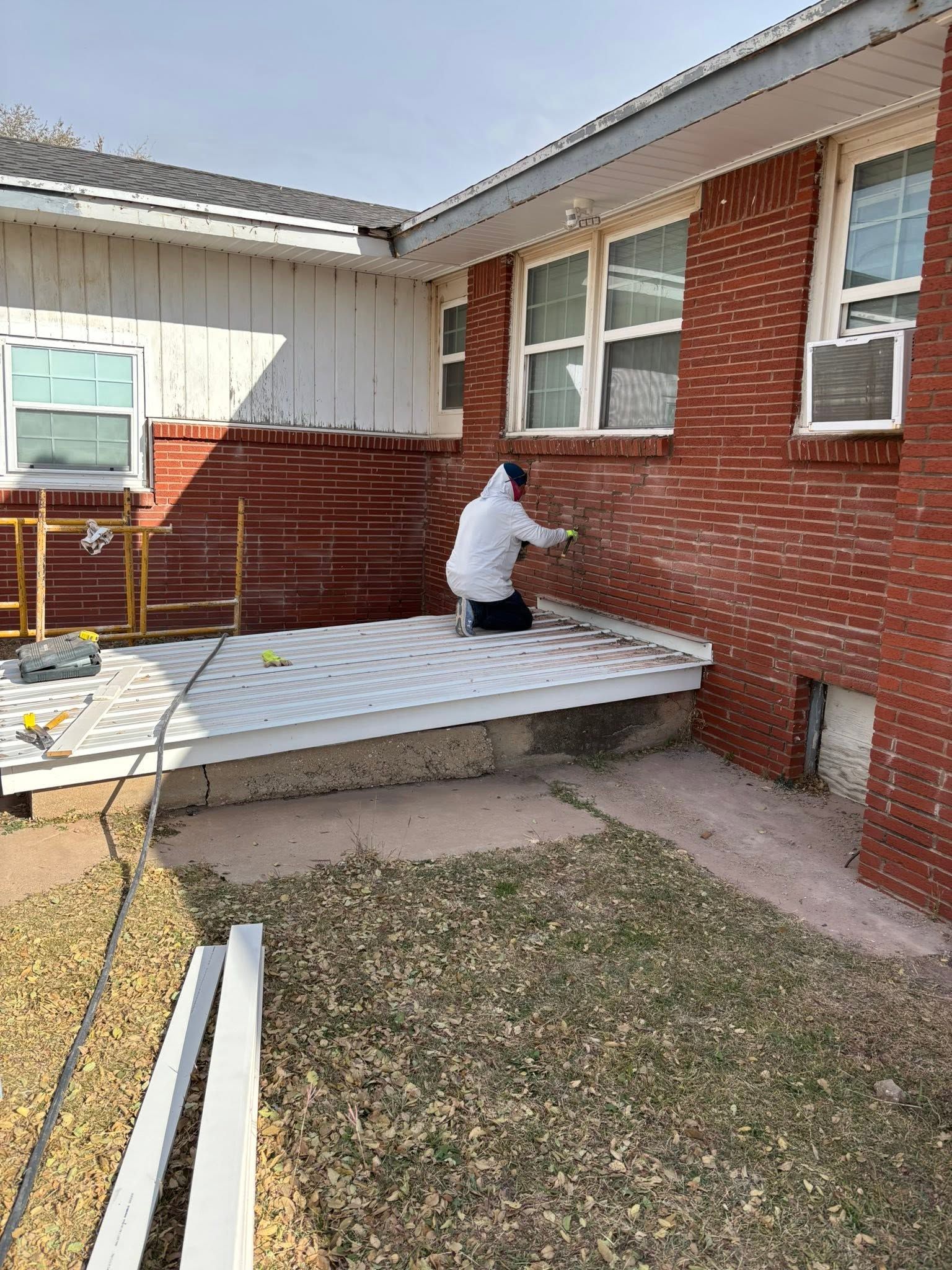
Repair work begins with removing deteriorated brick and raking out crumbling mortar joints to sound material. Replacement brick is selected to match the original in size, color, and texture, then laid with fresh mortar mixed to approximate the existing joint color. Repointing involves filling cleaned joints with new mortar, tooling the surface to match the original profile, and allowing proper curing to bond the new material to the old.
Schedule a masonry evaluation to identify damaged sections and determine whether repair or full replacement is needed.
What Proper Brick Repair Requires
Mortar must be mixed to the correct consistency and composition—too hard and it cracks the brick during thermal expansion, too soft and it erodes prematurely. Joint depth is raked back at least half an inch before repointing to ensure the new mortar bonds fully rather than sitting as a surface layer that flakes off. Color matching involves adjusting sand and cement ratios or adding pigment to approximate the weathered appearance of existing joints.
Once repairs cure, you notice uniform mortar joints free of gaps or voids, brick surfaces that no longer flake or crumble, and a restored appearance where damaged sections blend with the original wall. Water no longer penetrates through cracked joints or spalled brick faces, preventing further freeze-thaw damage and interior moisture problems. Straight Edge Siding, Fencing & Decks sources matching brick from suppliers familiar with older Panhandle construction styles to maintain visual consistency across the repaired area.
Full replacement becomes necessary when extensive cracking, structural movement, or widespread deterioration makes piecemeal repair impractical. The process involves removing damaged masonry down to the foundation or framing, rebuilding with new brick and mortar, and tying the new work into sound sections with header courses or wall ties. Chimneys require flashing integration and cap installation to prevent water entry at the roofline.
Questions Before Starting Your Project
Homeowners considering masonry work often ask about material matching, project duration, and how repairs affect daily life.
Can you match existing brick color and mortar when replacing damaged sections?
Brick suppliers maintain inventories of common older styles, and mortar can be custom-mixed with specific sand types and pigments to approximate weathered joint color, ensuring repairs blend with the surrounding wall.
How much does professional brick repair and replacement cost in Amarillo?
Costs depend on the extent of damage, accessibility of the work area, whether brick needs to be sourced specially, and the linear footage of joints requiring repointing or replacement.
What causes brick to spall or crack on older homes in the Panhandle?
Freeze-thaw cycles force moisture absorbed into the brick to expand, breaking off the face, while thermal expansion without adequate movement joints causes cracking when the masonry cannot flex with temperature changes.
How long does brick repair take, and will it disrupt my home?
Small repairs involving repointing or replacing a few damaged units take a day or two, while larger projects requiring scaffolding and extensive replacement may span a week, with exterior access the primary consideration rather than interior disruption.
Why does mortar deteriorate faster than the brick itself in some cases?
Mortar is intentionally softer than brick to act as a sacrificial material that absorbs movement and weathering, protecting the more expensive and harder-to-replace masonry units from damage.
Straight Edge Siding, Fencing & Decks evaluates masonry condition to recommend targeted repairs or full replacement based on structural needs and budget. Set up a consultation to review your home's brick and receive a detailed repair plan.