
Outdoor Spaces Built for Panhandle Conditions
Composite Decking in Amarillo for homeowners avoiding the seasonal maintenance cycle of wood structures
Straight Edge Siding, Fencing & Decks installs composite decking across Amarillo and surrounding Panhandle towns, addressing the reality that traditional wood decks require constant upkeep in high plains weather. Extreme temperature swings between summer heat and winter freezes cause wood to expand, contract, crack, and splinter, while composite materials resist these cycles without annual sealing or staining. You see the difference in how the surface stays consistent year after year, without the warping or color fade that wood shows after just one season of Texas sun exposure.
Composite decking installation involves material selection matched to the Panhandle's temperature extremes and fastening techniques that accommodate the expansion and contraction behavior specific to composite boards. Unlike wood, composite expands differently across its length and width, so fastener placement and spacing follow manufacturer specifications that account for those dimensional changes during temperature shifts. The installation process prevents the buckling or gapping problems that occur when composite boards are secured like traditional lumber.
Schedule a property evaluation to review composite material options suited to your outdoor space and local climate conditions.
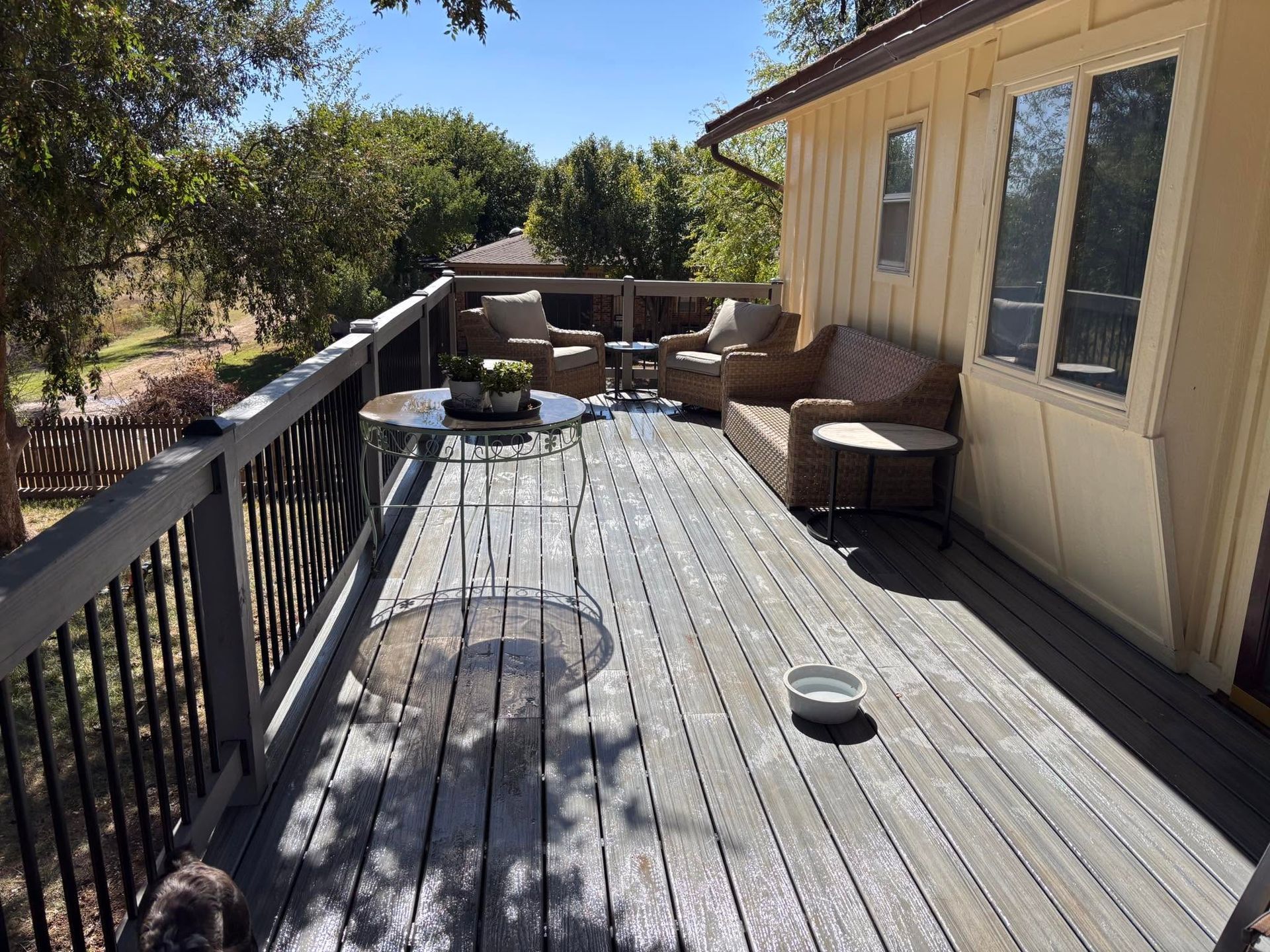
How Composite Material Responds to High Plains Weather
The fastening approach for composite decking differs from wood because composite boards move more during temperature changes but do not absorb moisture the same way lumber does. Each board requires specific gap spacing at installation to allow for thermal expansion without creating pressure points that cause buckling when summer temperatures reach triple digits. The fasteners themselves must avoid over-tightening, which restricts movement and leads to stress cracks or surface damage around screw heads.
After installation completes, you notice that rain and snow sit on the surface briefly before draining rather than soaking into the material, and the deck color stays consistent without the silvering or darkening that untreated wood shows within months. The surface remains splinter-free even after years of use, and there is no annual ritual of sanding, staining, or sealing before summer gatherings. Composite decking holds its structure through freeze-thaw cycles that cause wood boards to cup or split along grain lines.
Composite decking includes the boards, fascia trim, and railing systems, but the substructure framing still uses treated lumber since composite materials do not provide the load-bearing strength required for joists and beams. Proper ventilation beneath the deck prevents heat buildup that can warp composite boards from below, and the framing layout must account for the longer spans composite boards can handle compared to standard deck lumber.
Questions Homeowners Ask Before Deck Projects
Composite decking addresses concerns about ongoing maintenance and weather durability that wood structures cannot match in Amarillo's climate, where seasonal temperature extremes test every outdoor material.
What makes composite decking more suitable for Panhandle temperature swings than wood?
Composite materials resist the expansion and contraction cycles that cause wood to crack and warp during Amarillo's summer-to-winter temperature range, which can exceed 100 degrees between seasonal highs and lows. The material composition prevents moisture absorption that drives freeze-thaw damage in wood grain.
How does the installation process account for material expansion?
Fastening techniques include precise gap spacing between boards and avoid over-tightening screws, allowing the composite to expand during heat without buckling or creating pressure points. Each board is secured according to specifications that match its thermal movement characteristics.
What changes after composite decking replaces an older wood deck?
The surface stays smooth without splintering, color remains consistent without annual staining, and there is no seasonal maintenance cycle of sanding or sealing. Water drainage improves because composite does not absorb moisture like wood.
When should composite decking be scheduled for installation in Amarillo?
Installation works best during moderate temperature periods in spring or fall when material handling is easier and boards are at mid-range dimensions, reducing the need for extreme gap adjustments during fastening.
Why does composite decking cost more initially than wood?
The material itself carries a higher price point, and installation requires specific fastening techniques and gap spacing that take additional time compared to standard wood deck construction. The investment offsets years of maintenance costs and material replacement that wood demands.
Straight Edge Siding, Fencing & Decks handles composite deck installation with attention to the fastening and spacing details that determine long-term performance in high plains weather. Request a project estimate based on your outdoor space dimensions and material preferences.